
What Keeps Current From Leaking Through Your Motor Windings?
Inside every electric motor, copper windings carry current. They sit inside steel slots. Steel conducts electricity. Copper conducts electricity. If they touch, current leaks. The motor shorts. Performance drops. Eventually, the motor fails.
The only thing standing between the copper and the steel is a thin sheet of material called electrical insulation paper.
It does not look like much. A fraction of a millimeter thick. Cut into precise shapes. Slid into the slot before the windings go in. But without it, the motor does not work.
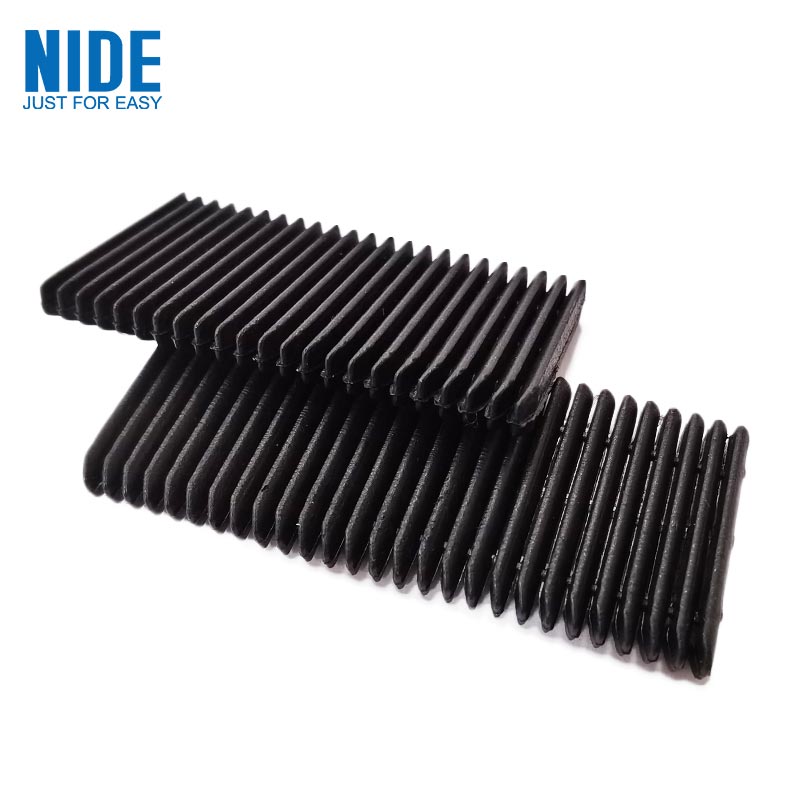
What Insulation Paper Actually Does
The stator core is made of stacked steel laminations. The slots are punched into them. The engineer inserts a piece of insulation paper into each slot, folded to line the walls. Then the windings go in. Then the slot wedge closes the opening.
The paper has three jobs. First, electrical insulation — stop current from jumping from the copper to the steel. Second, mechanical protection — cushion the windings against the hard edges of the steel laminations. Third, thermal management — some grades help conduct heat away from the windings.
If the paper fails at any of these, the motor fails.
The Material Families
Not all insulation paper is the same. Different motors need different materials. The choice depends on temperature, voltage, mechanical stress, and cost.
The table below shows the most common types used in motor manufacturing today.
| Material code | Construction | Temperature class | Typical thickness | Best for |
|---|---|---|---|---|
| DMD | Polyester film + polyester nonwoven both sides | Class F (155°C) | 0.15 – 0.35 mm | General motors, power tools, home appliances |
| NMN | Polyester film + polyamide nonwoven both sides | Class F (155°C) | 0.20 – 0.40 mm | Higher mechanical strength, automotive motors |
| NHN | Polyimide film + polyamide nonwoven both sides | Class H (180°C) | 0.20 – 0.35 mm | High-temperature motors, EV traction motors |
| Aramid paper | 100% aramid fibers (Nomex type) | Class H (180°C) to Class C (220°C) | 0.18 – 0.50 mm | High reliability, transformers, heavy-duty motors |
| Polyimide film | Single-layer polyimide (Kapton type) | Class H (180°C) to Class C (220°C) | 0.05 – 0.15 mm | Thin-wall applications, aerospace |
DMD is the workhorse. It covers most standard motors at a reasonable cost. NMN adds mechanical toughness. NHN adds heat resistance. Aramid paper adds both plus superior dielectric strength. Polyimide film is for tight spaces.
Understanding Temperature Classes
Every insulation material carries a temperature rating. This is not marketing. It is a tested limit.
| Class | Maximum operating temperature | Typical applications |
|---|---|---|
| Class A | 105°C | Older designs, low-duty motors |
| Class E | 120°C | Small fans, pumps |
| Class B | 130°C | General purpose motors |
| Class F | 155°C | Power tools, industrial motors |
| Class H | 180°C | EV motors, servo motors |
| Class C | 220°C | High-performance, aerospace, extreme duty |
Selecting the wrong class is a common mistake. If the motor runs at 140°C continuous, Class B (130°C) will fail. Class F (155°C) is the minimum safe choice.
But note: the temperature rating applies to continuous operation. Peak temperatures may be higher. Good engineers add margin. A motor that runs at 140°C continuous should get Class H insulation, not just Class F.
Key Parameters: What the Spec Sheet Actually Means
When evaluating insulation paper, several technical parameters matter. Here is what they mean.
Thickness. Measured in millimeters. Typical range is 0.15mm to 0.40mm for slot liners. Thicker paper provides higher dielectric strength and better mechanical protection. Thinner paper leaves more room for copper, increasing motor power density. The tradeoff is engineering judgment.
Dielectric strength. Measured in kilovolts per millimeter. This tells you how much voltage the paper can block before breaking down. A typical value for DMD is 5-8 kV for a 0.2mm sheet. Higher is better, but the actual requirement depends on motor voltage. For a 400V EV motor, 3-5 kV is adequate. For 800V systems, 6-8 kV is safer.
Tensile strength. Measured in Newtons per 15mm width. This tells you how much pulling force the paper can take before tearing. Important because the paper is folded and inserted by machine. Weak paper tears during assembly. Downtime follows.
Elongation at break. Percentage of stretch before tearing. Paper that stretches 10-15% is more forgiving during folding. Brittle paper cracks at sharp corners.
Edge tear resistance. Measured in Newtons. Paper gets folded. Folds create stress points. If edge tear resistance is low, the paper splits at the fold line during insertion.
A good supplier provides these numbers on the material certificate. A poor supplier says "it meets industry standards" without giving actual test values.
Why EV Motors Are Different
Electric vehicle motors have changed the insulation paper market. The requirements are stricter.
Higher temperatures. EV motors run hotter than industrial motors. Liquid cooling helps, but hotspots still reach 160-180°C. Class H materials (180°C) are standard. Some manufacturers are moving to Class C (220°C) for next-generation designs.
Higher voltages. Early EV motors ran at 300-400V. Newer systems run at 800V. Coming systems will run at 1200V or higher. Dielectric strength requirements have doubled. Paper that worked for 400V may not be safe for 800V.
Oil exposure. Many EV motors use oil for cooling and lubrication. The insulation paper sits in that oil. Some materials swell or degrade in oil. Polyimide-based papers perform well. Polyester-based papers may have limitations. Ask for oil compatibility test data.
Automation. EV motor production lines run at high speed. Paper is fed from rolls, cut, folded, and inserted automatically. Material consistency matters. Thickness variation of ±0.01mm can jam an automated inserter.
Three Real Problems That Happen on Production Lines
Theoretical material properties are one thing. What actually goes wrong on the factory floor is another.
Problem one: paper tears during folding. The machine folds the paper into a U-shape to line the slot. If the paper has low edge tear strength, it splits at the fold line. The line stops. An operator clears the jam. Production resumes. This happens dozens of times per shift with poor material.
Problem two: paper dimensions change with humidity. Aramid paper absorbs moisture from the air. In high humidity, it expands. In low humidity, it shrinks. The machine is calibrated for one size. When the paper changes size, the folded shape changes. The insert fails. Good suppliers ship paper in moisture-proof packaging. Good factories store it in climate-controlled rooms.
Problem three: adhesive contamination. Some insulation paper has a heat-activated adhesive layer on one side. After insertion, heat bonds the paper to the slot walls. If the adhesive oozes out during storage or transfer, it sticks to machine guides. Dust collects. Alignment drifts. The solution is clean manufacturing and proper release liners.
How to Specify Insulation Paper Correctly
Here is a real specification example for an EV motor traction drive.
| Parameter | Requirement |
|---|---|
| Material | NHN or aramid paper |
| Temperature class | Class H (180°C) minimum |
| Thickness | 0.25mm ±0.02mm |
| Width | As per drawing (slot width + 2x overhang) |
| Dielectric strength | ≥6 kV for 0.25mm thickness |
| Tensile strength | ≥150 N/15mm in machine direction |
| Elongation | ≥10% |
| Oil compatibility | No swelling or delamination after 1000 hours in transmission fluid at 120°C |
| Packaging | Moisture-proof, humidity indicator included |
| Certification | UL94 V-0 flammability, RoHS compliant |
Send this to three suppliers. Compare the test reports they provide. Ask about variation — batch to batch, roll to roll. The supplier who answers with data is the one to trust.
Six Questions Buyers Ask
Can I use the same insulation paper for all my motors?
Not usually. Different motors run at different temperatures and voltages. Standardizing on one material simplifies inventory but forces you to use a higher-grade material than necessary for some motors, increasing cost. Or you use a lower-grade material and risk failure. Better to qualify two or three materials and match them to applications.
What is the difference between NMN and NHN?
The middle layer. NMN uses polyester film. NHN uses polyimide film. Polyimide withstands higher temperatures. For motors running below 155°C, NMN is fine. For 155-180°C, choose NHN. The cost difference is modest.
Does thicker paper always mean better insulation?
Not always. Dielectric strength increases with thickness, but mechanical fit becomes harder. Thick paper takes up space inside the slot. That space could have held more copper. Motor designers trade off insulation thickness against copper fill. Thinner paper allows more copper, higher power, but requires better process control.
What is the shelf life of insulation paper?
Depends on storage conditions. In original packaging, climate-controlled, aramid paper lasts years. Polyester-based materials may degrade faster. The main risks are moisture absorption and adhesive aging. If paper has been stored for more than two years, test a sample before use.
How do I know if a supplier's paper is consistent?
Ask for Cpk data on thickness. A Cpk of 1.33 or higher means the process is capable. Also ask for batch-to-batch test reports. If a supplier cannot produce these, they are not controlling their process.
Can insulation paper be recycled?
Most is thermoset or high-performance thermoplastic. Recycling is difficult. Some aramid papers can be repulped, but the process is not widely available. The industry focus is on reducing waste in cutting and insertion, not on post-consumer recycling.
A Note on Compatibility With Slot Wedges
Insulation paper lines the slot walls. The slot wedge closes the opening. They must work together.
The wedge presses against the paper at the slot opening. If the paper is too soft, the wedge will dig into it. If the paper is too brittle, it will crack at the wedge contact point.
For EV motors, many engineers pair aramid paper with aramid wedges. Same material family, similar thermal expansion and mechanical behavior. For general motors, DMD paper with glass-fiber wedges is a proven combination.
When ordering from a supplier, specify both items together. The supplier can then match the material systems.
Send Inquiry

X
We use cookies to offer you a better browsing experience, analyze site traffic and personalize content. By using this site, you agree to our use of cookies.
Privacy Policy