
Are You Assuming All DMD Insulation Paper Is the Same—When the Difference Between Grades Could Cost You Reliability?
NIDE DMD insulation paper solutions highlight why material grades matter in motor reliability, especially when small insulation differences can affect long-term performance.
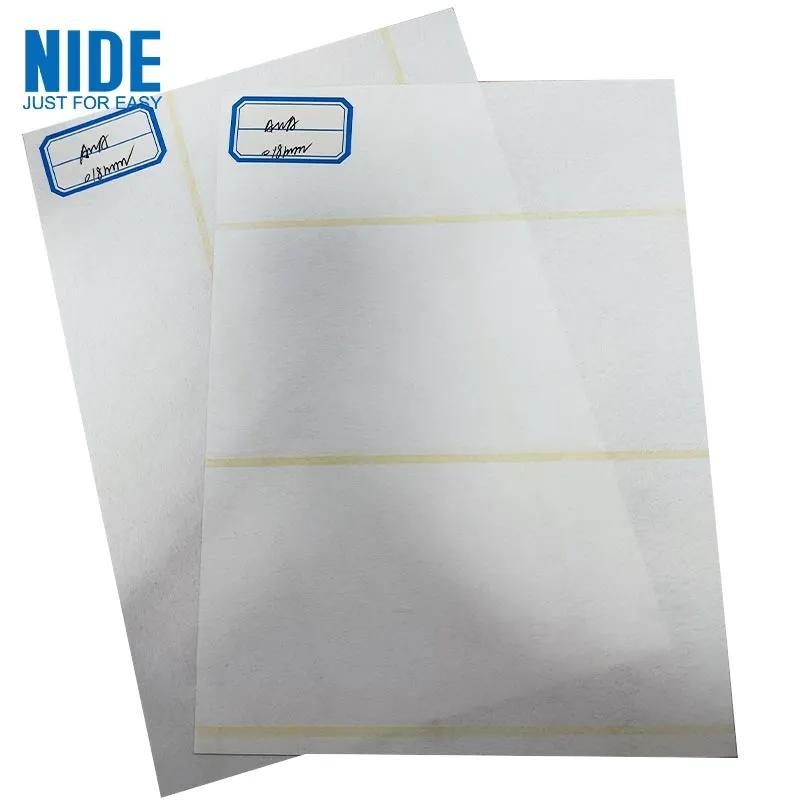
Why Insulation Paper Selection Matters in Motor Production
In many electric motors, insulation materials are not the most visible components, but they play a critical role in protecting electrical systems during operation. As motors become smaller, more powerful, and more frequently used in demanding environments, the choice of insulation paper has become an important factor in maintaining stable performance.
DMD insulation paper is widely used in motor applications because of its combination of electrical insulation, mechanical strength, and thermal resistance. However, different grades of DMD materials may have different properties, and using a suitable grade for a specific motor design is essential to avoid problems such as insulation aging, overheating, or reduced service life.
For companies involved in power tools, household appliances, automotive systems, and industrial motors, understanding the differences between insulation materials helps improve component selection and reduce unexpected maintenance issues.
What Makes DMD Insulation Paper Different?
DMD refers to a three-layer composite insulation material made with polyester film and polyester fiber non-woven materials. The structure provides a balance between flexibility and insulation protection.
Although two products may both be called DMD insulation paper, their performance can vary depending on factors such as material composition, thickness, bonding quality, and temperature resistance.
A motor operating in a vacuum cleaner, for example, may require different insulation characteristics compared with a motor used in automotive equipment. The operating temperature, vibration level, and electrical load all influence the appropriate material choice.
Common Differences
The following factors are often considered when selecting insulation paper for different motor designs:
| Performance Factor | Why It Matters in Motors | Possible Impact of Incorrect Selection |
|---|---|---|
| Thickness | Determines insulation distance and mechanical support | Reduced protection between electrical parts |
| Thermal Class | Defines temperature resistance capability | Faster insulation aging under heat |
| Dielectric Strength | Indicates ability to withstand electrical stress | Increased risk of insulation breakdown |
| Mechanical Strength | Supports winding structures during assembly and operation | Damage during production or vibration |
| Flexibility | Helps fit different motor slot designs | Difficult installation or poor coverage |
These differences show that insulation paper is not simply a basic protective layer. It is part of the motor design system and needs to match the application requirements.
How Insulation Materials Affect Motor Reliability
A motor operates through the interaction of electrical energy, magnetic fields, and mechanical movement. During this process, heat and electrical stress continuously affect internal components.
When insulation materials maintain their performance under these conditions, they help protect winding systems and reduce the chance of electrical failures. On the other hand, unsuitable insulation materials may accelerate aging, especially in motors that frequently start, stop, or operate under heavy loads.
For applications such as power tools and automotive motors, vibration resistance and temperature stability are particularly important. These motors often experience repeated mechanical stress, making material consistency a key consideration.
NIDE’s Experience in Motor Component Applications
Established in 2007, Ningbo Haishu Nide International Co., Ltd. focuses on motor components and provides solutions covering commutators, carbon brushes, ball bearings, insulation paper, shafts, thermal protectors, magnets, fans, and motor covers.
With experience supporting different motor applications, NIDE understands that each component must work together within the complete motor system. Insulation materials are considered alongside other components to support stable motor assembly and operation.
The company’s product range serves various motor fields, including power tools, vacuum cleaners, window lifters, mixers, automotive applications, and motorcycles. Through technical support and inspection procedures, NIDE continues to focus on component consistency and application suitability.
Why Material Matching Is Becoming More Important
Modern motor designs are moving toward higher efficiency and smaller structures. This trend creates new challenges because components must handle higher power density within limited spaces.
For example, a compact motor may generate more heat in a smaller area compared with older designs. In such cases, insulation paper with suitable thermal and electrical properties becomes increasingly important.
The selection process usually considers:
A correct material choice at the design stage can help prevent performance issues later in production and operation.
Industry Focus: Small Components, Major Effects
The development of electric motors often focuses on visible improvements such as efficiency, speed, and size reduction. However, internal components like insulation materials continue to influence overall reliability.
DMD insulation paper represents one example of how supporting materials contribute to motor quality. While it may appear simple compared with larger motor parts, its role in electrical protection makes it an important element in motor engineering.
As motor applications continue expanding across transportation, household appliances, and industrial equipment, attention to component selection will remain an important part of improving product stability.
In conclusion, differences between insulation paper grades should not be overlooked when developing or maintaining motor systems. Understanding material properties and application requirements helps create more reliable motor designs. With its range of motor components, including DMD insulation paper, NIDE provides component solutions based on practical motor application experience and technical support.
Send Inquiry

X
We use cookies to offer you a better browsing experience, analyze site traffic and personalize content. By using this site, you agree to our use of cookies.
Privacy Policy