
Commutator for Power Tools: The Small Component Behind Reliable Motor Performance
When people use power tools such as electric drills, angle grinders, saws, and polishing machines, they usually focus on the motor power, speed, and durability. However, inside many brushed electric motors, a small component plays a critical role in converting electrical energy into mechanical motion — the Commutator for Power Tools. Although a commutator is only a small part of the motor assembly, its design directly affects motor efficiency, operating stability, noise level, and service life. In industries that require high-speed rotating equipment, commutator manufacturing involves precise engineering, material selection, and strict quality control.
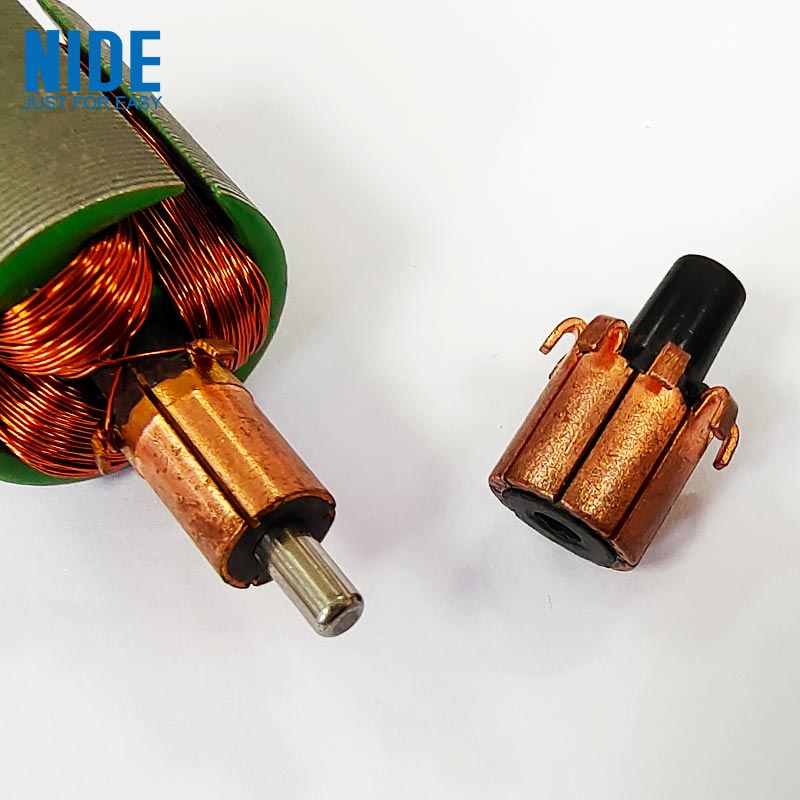
What Is a Commutator for Power Tools?
A Commutator for Power Tools is a rotating electrical switching component used in brushed DC motors and universal motors. Its main function is to control the direction of current flowing through the motor windings, allowing the motor rotor to continue rotating. A typical commutator consists of:| Component | Function |
|---|---|
| Copper Segments | Conduct electrical current between brushes and rotor windings |
| Insulation Material | Separates individual copper segments electrically |
| Core Structure | Provides mechanical support for rotating operation |
| Connection Terminals | Connects the commutator with motor windings |
Why Is the Commutator Important in Power Tool Motors?
A power tool motor operates under demanding conditions: High rotational speed Frequent starting and stopping Heavy mechanical loads Continuous vibration The commutator must maintain stable electrical contact during these conditions. A well-designed commutator helps improve: Motor efficiency Rotation stability Electrical conductivity Tool operating life If the commutator surface wears unevenly, it may lead to problems such as: Increased sparks Reduced motor power Excessive heat generation Shortened brush lifeAn Industry Secret: The Surface Quality of the Commutator Matters More Than Its Appearance
A commutator may look like a simple copper component, but its surface condition is extremely important. Motor manufacturers pay close attention to: Segment precision Surface roughness Roundness accuracy Insulation spacing Even tiny manufacturing differences can affect: Contact stability with carbon brushes Electrical resistance Heat generation For high-speed power tools, a small imbalance in the rotating component can create vibration and reduce motor performance.Materials Used in Power Tool Commutators
The material combination of a commutator determines its electrical and mechanical performance.Copper Segments
Copper is commonly used because of its: High electrical conductivity Good thermal performance Suitable mechanical propertiesInsulation Materials
Insulation between copper segments prevents electrical short circuits. Common materials include: Mica High-temperature insulating compoundsSpecial Alloy Materials
Some applications use copper alloys to improve: Wear resistance Mechanical strength High-speed performanceThe Manufacturing Process Behind a Power Tool Commutator
Producing a reliable commutator requires several precision processes.Copper Segment Forming
Copper pieces are shaped into accurate segments according to motor design requirements.Molding and Assembly
Copper segments are fixed with insulation materials to create a complete rotating structure.Machining and Surface Finishing
The commutator surface is precisely processed to ensure: Correct diameter Smooth contact surface Stable rotationTesting
Quality inspections may include: Dimensional measurement Electrical conductivity testing Insulation testing Dynamic balance testingCommutator vs Brushless Motor Technology
With the development of brushless motor technology, some modern power tools have replaced traditional brushed motors. The differences include:| Feature | Brushed Motor with Commutator | Brushless Motor |
|---|---|---|
| Structure | Uses brushes and commutator | Uses electronic control system |
| Maintenance | Requires brush replacement over time | Generally lower mechanical wear |
| Cost | More economical design | Higher technology requirements |
| Application | Common in many traditional power tools | Increasingly used in advanced tools |
Common Applications of Commutators in Power Tools
Commutators are widely used in motors for:Electric Drills
Provide stable rotation for drilling and fastening operations.Angle Grinders
Support high-speed rotation under demanding working conditions.Electric Saws
Maintain motor operation during cutting loads.Sanders and Polishing Tools
Provide consistent speed control for surface processing.The Hidden Challenge: Managing Heat and Wear
One of the biggest challenges in commutator design is controlling the relationship between electrical performance and mechanical wear. During operation: Brushes create friction Electrical current generates heat Rotation creates mechanical stress A good commutator design must balance: Conductivity Wear resistance Temperature stability Contact reliability This is why material selection and manufacturing accuracy are essential.Future Trends of Power Tool Commutators
Improved Material Technology
Future developments may focus on: Better wear-resistant materials Improved copper alloy performance Longer service lifeHigher Precision Manufacturing
Advanced production equipment will improve: Dimensional accuracy Surface consistency Motor efficiencyHybrid Motor Development
Although brushless motors are growing, improved brushed motor technologies may continue serving cost-sensitive and industrial applications.Conclusion: A Small Component Supporting Powerful Tools
A Commutator for Power Tools may be hidden inside the motor, but its role is essential for electrical energy conversion and stable operation. Through precise manufacturing, advanced materials, and continuous improvement, commutators continue to support reliable performance in drills, grinders, saws, and many other power tools. This small rotating component demonstrates how even the smallest parts can have a major influence on industrial equipment performance.Send Inquiry

X
We use cookies to offer you a better browsing experience, analyze site traffic and personalize content. By using this site, you agree to our use of cookies.
Privacy Policy