
Why Is a Commutator for Power Tools So Important for Motor Performance and Tool Lifespan?
A commutator for power tools is a core component in brushed DC motors that directly determines how efficiently electrical energy is converted into mechanical motion. It controls current direction switching, stabilizes torque output, and ensures consistent motor rotation under load. In industrial and consumer power tools such as drills, grinders, saws, and impact tools, the commutator plays a decisive role in performance stability, durability, and safety. This article provides a deep technical and practical understanding of commutators for power tools, including working principles, material selection, manufacturing precision, performance factors, troubleshooting methods, and industrial applications. It is designed for engineers, procurement specialists, and manufacturers seeking reliable motor component solutions.
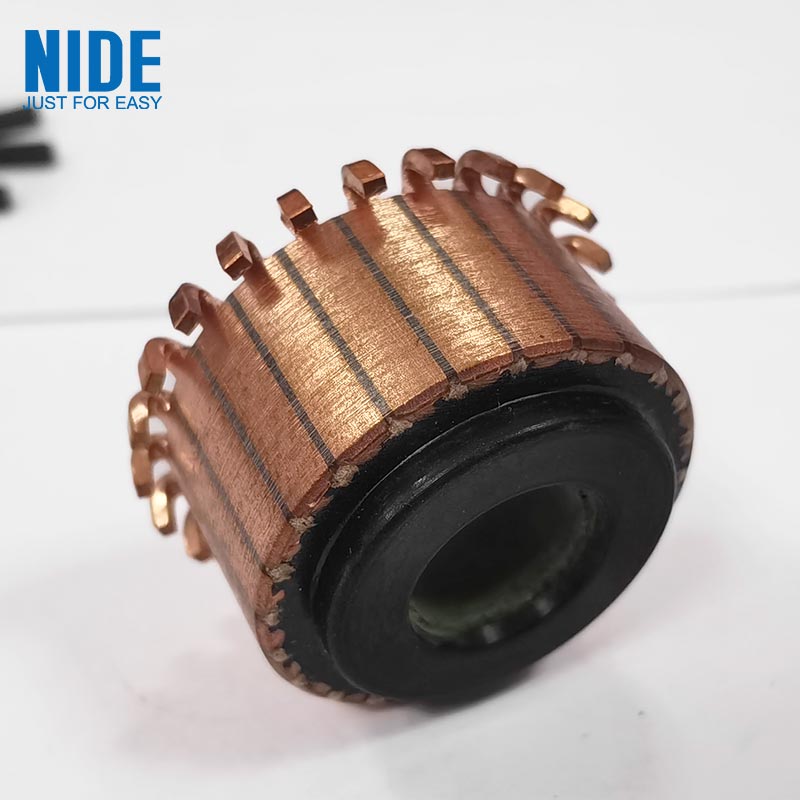
Table of Contents
- 1. What Exactly Is a Commutator for Power Tools?
- 2. How Does a Commutator Work Inside a Power Tool Motor?
- 3. Which Materials Are Used in High-Performance Commutators?
- 4. How Is a Commutator Manufactured with Precision?
- 5. What Factors Affect Commutator Performance and Lifespan?
- 6. What Problems Commonly Occur and How Can They Be Solved?
- 7. How to Choose the Right Commutator for Power Tools?
1. What Exactly Is a Commutator for Power Tools?
A commutator for power tools is a mechanical rotating electrical switch used in brushed DC motors to periodically reverse the direction of current in the rotor windings. This controlled switching enables continuous rotational motion, which is essential for the operation of electric power tools.
In practical applications, the commutator is directly responsible for ensuring that tools such as electric drills, angle grinders, circular saws, and polishers maintain stable torque output. Without it, the motor would fail to produce continuous rotation, resulting in inefficient or non-functional tools.
Because power tools often operate under high load, vibration, and heat conditions, the commutator must be engineered with high precision and durability to ensure consistent performance and long service life.
2. How Does a Commutator Work Inside a Power Tool Motor?
The working principle of a commutator is based on synchronized mechanical rotation and electrical switching. As the motor shaft rotates, carbon brushes maintain sliding contact with segmented copper bars on the commutator surface. This contact reverses the current direction in the armature windings at precise intervals.
This process ensures that the magnetic forces inside the motor continuously generate torque in the same rotational direction. Without this switching mechanism, the motor would stop or oscillate instead of rotating smoothly.
- Current Switching Function: Reverses current in windings to maintain continuous rotation
- Brush Contact System: Transfers electrical energy between stationary and rotating parts
- Arc Suppression: Reduces electrical sparking during switching
- Torque Stabilization: Ensures smooth output under varying loads
In high-speed power tools, this switching occurs thousands of times per minute, which means the commutator must be extremely resistant to wear and heat.
3. Which Materials Are Used in High-Performance Commutators?
Material selection is one of the most important factors determining commutator performance. High-quality commutators rely on a combination of conductive metals, insulation materials, and structural reinforcements.
| Component | Material | Why It Is Used |
|---|---|---|
| Commutator Segments | High-Purity Electrolytic Copper | Ensures excellent conductivity and minimal energy loss |
| Insulation Layer | High-Grade Mica | Withstands high temperature and prevents short circuits |
| Shaft Core | Hardened Steel Alloy | Provides structural strength and rotational stability |
| Bonding Material | Heat-Resistant Epoxy Resin | Maintains integrity under mechanical stress and vibration |
The combination of copper and mica is especially critical because it balances conductivity and insulation. Poor material selection can lead to overheating, sparking, and premature failure in power tools.
4. How Is a Commutator Manufactured with Precision?
The manufacturing process of a commutator for power tools requires high-precision engineering to ensure electrical stability and mechanical balance. Even microscopic deviations can affect performance.
- Material Preparation: High-purity copper and industrial mica sheets are selected and inspected.
- Segment Forming: Copper is stamped and shaped into precise commutator segments.
- Insulation Assembly: Mica sheets are inserted between each copper segment.
- High-Pressure Molding: Components are compressed to ensure tight structural bonding.
- CNC Precision Turning: Ensures perfect circular geometry and balance.
- Surface Finishing: Polishing reduces friction and improves brush contact.
- Testing & Inspection: Electrical, thermal, and mechanical performance tests are conducted.
Advanced manufacturers also perform dynamic balancing tests and high-speed rotation simulations to ensure reliability in real-world tool applications.
5. What Factors Affect Commutator Performance and Lifespan?
The performance and durability of a commutator are influenced by multiple operational and design factors. Understanding these factors is essential for optimizing motor efficiency.
- Thermal Resistance: High temperatures can deform materials and reduce lifespan
- Electrical Conductivity: Determines energy efficiency and heat generation
- Mechanical Balance: Affects vibration, noise, and wear rate
- Brush Contact Quality: Directly influences sparking and stability
- Operating Load: Continuous overload accelerates wear
Proper design optimization and maintenance practices can significantly extend commutator lifespan and improve overall power tool efficiency.
6. What Problems Commonly Occur and How Can They Be Solved?
Despite advanced manufacturing, commutators may still experience operational issues due to wear, contamination, or improper usage.
- Sparking: Caused by poor brush contact, dust, or surface roughness
- Uneven Wear: Results from imbalance or inconsistent brush pressure
- Overheating: Caused by overload or insufficient cooling
- Insulation Breakdown: Due to aging, moisture, or contamination
- Vibration Noise: Caused by mechanical imbalance in the rotor system
Solutions include surface resurfacing, brush replacement, load adjustment, cleaning, and in severe cases, full commutator replacement.
7. How to Choose the Right Commutator for Power Tools?
Selecting the right commutator requires careful evaluation of technical specifications, application environment, and quality standards.
- Check copper purity for conductivity efficiency
- Verify mica insulation quality for heat resistance
- Ensure compatibility with motor speed and torque requirements
- Evaluate manufacturing precision and balancing quality
- Confirm supplier reliability and certification standards
Industrial users should prioritize suppliers with strong engineering capabilities and consistent quality control systems.
FAQ (Frequently Asked Questions)
Q1: Why is the commutator so important in power tools?
Because it controls current switching in the motor, ensuring continuous rotation and stable torque output.
Q2: How long does a commutator usually last?
Typically between 1,000 and 5,000 operating hours depending on usage conditions and maintenance quality.
Q3: What causes commutator sparking?
Common causes include worn brushes, contamination, uneven surfaces, or overload conditions.
Q4: Can a damaged commutator be repaired?
Minor surface wear can be repaired by resurfacing, but severe damage usually requires replacement.
Q5: How can I extend commutator life?
Regular maintenance, proper load control, brush replacement, and cleaning can significantly extend lifespan.
Conclusion
The commutator for power tools is a critical component that determines motor efficiency, stability, and durability. High-quality design, precise manufacturing, and proper maintenance are essential for ensuring long-term performance in demanding applications.
For inquiries, bulk orders, or technical consultation, feel free to contact us today and get expert support for your power tool commutator solutions.
Send Inquiry

X
We use cookies to offer you a better browsing experience, analyze site traffic and personalize content. By using this site, you agree to our use of cookies.
Privacy Policy